Scaffold planks are one of the most straightforward components on any construction site. They sit underfoot, they hold workers at height, and most of the time nobody gives them a second thought. That is exactly where the risk lives.
When something does go wrong on a scaffold platform, a plank deflects unexpectedly, a surface is slippery in the wet, or a board fails under load, the question that follows is always the same: was this plank fit for purpose, and was it certified to the relevant Australian Standard? For scaffolding suppliers, that question is not just a safety matter. It is a liability matter, an insurance matter, and increasingly a site access matter. Understanding what AS/NZS 1577:2018 actually requires, and what a certified LVL scaffold plank like Auswood’s Envirobeam delivers, is the foundation of responsible supply.
What AS/NZS 1577 Requires and Why It Matters
AS/NZS 1577 is the Australian and New Zealand Standard for scaffold planks. It sets the minimum requirements for structural performance, dimensional tolerance, surface slip resistance, moisture content, and the testing methodology that validates those properties. Compliance with this standard is not optional on regulated construction sites in Australia. Under the model Work Health and Safety Regulations adopted across most states and territories, scaffolding components must be fit for purpose and meet applicable standards. Where AS/NZS 1577 is the recognised standard for plank performance, using uncertified product creates a straightforward compliance gap.
For scaffolding suppliers, the exposure is real. If an uncertified plank is supplied and a worker is injured, the absence of certification does not just complicate the insurance claim — it can establish a basis for negligence. The standard exists precisely to define what constitutes a fit product. Operating outside it is a decision that carries consequences well beyond the price saving on the timber.
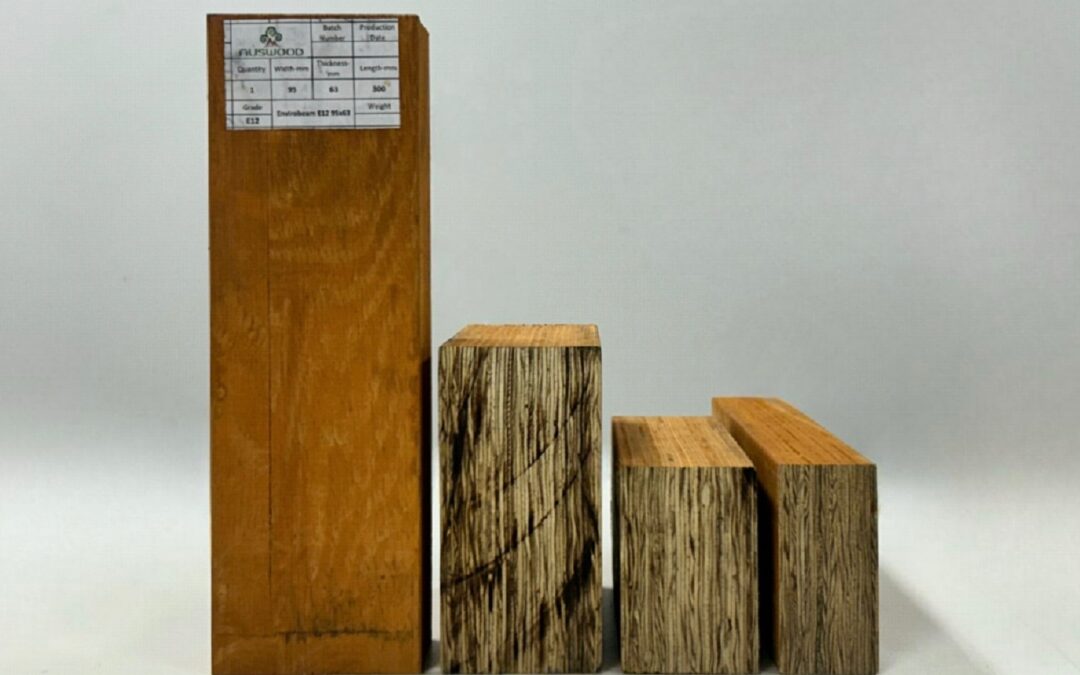
Auswood’s Envirobeam LVL Scaffold Plank is manufactured and certified to AS/NZS 1577 (as well as AS/NZS 4357.0:2005, the structural LVL standard). The certification is independently verified through Benchmark JAS-ANZ, one of Australia’s recognised product certification bodies. That certification is not a marketing claim — it is a documented, audited record of compliance that suppliers can produce when required.
Working Load Limit: Where Liability Becomes Concrete
The Working Load Limit (WLL) of a scaffold plank is the single most important number in its specification. It defines the maximum load the plank is rated to carry in service, and it is the figure that underpins every structural decision about platform configuration – plank spans, stacking allowances, and the number of workers on a bay.
Envirobeam scaffold planks LVL carry a WLL of 2.53 kN, which aligns with the load requirements for standard duty scaffolding platforms under AS/NZS 1577. That number is not derived from a theoretical calculation alone – it is backed by physical testing and certified by a third party.
The risk with uncertified planks is that there is no validated WLL. A supplier or contractor may have a reasonable belief that a particular product is strong enough. They may even have a manufacturer’s datasheet. But without independent certification, that figure is unverified. If the plank is on a site where AS/NZS 1577 compliance is required and something goes wrong, an unverified WLL claim provides no legal protection. It may actually make the position worse by demonstrating that the supplier was aware load capacity was a relevant consideration.
Certified WLL, backed by an audited standard, is the document that draws a clear line between compliant supply and liability exposure. For scaffolding suppliers who take their risk profile seriously, it is the minimum acceptable position.
Coefficient of Friction 0.73: Practical Safety on the Platform
A scaffold platform is a workplace, and like any workplace floor it needs to provide reliable footing. This matters most in the conditions Australian construction sites regularly produce — wet weather, muddy boots, morning dew on elevated platforms, and the general grime of an active site.
AS/NZS 1577 includes requirements for surface slip resistance, measured as the coefficient of friction (COF). Envirobeam scaffold planks achieve an average static coefficient of friction of 0.73, with a minimum of 0.65. These results come from standardised slip testing and are part of the certified performance record of the product.
A COF of 0.73 is a meaningfully safe figure for a work platform. For reference, occupational health guidance in Australia generally treats a COF below 0.4 as presenting a high slip risk and values above 0.6 as providing adequate traction for pedestrian surfaces under wet conditions. An average of 0.73 provides real margin above that threshold.
Aluminium scaffold planks are a common alternative, and they present a well-known problem in this respect. Aluminium surfaces without anti-slip treatment can have significantly lower COF values, particularly when wet, and the performance of any applied anti-slip coating degrades with wear. An LVL timber surface at 0.73 COF provides inherent slip resistance that does not depend on a coating remaining intact. That is a meaningful practical difference on a site where planks are moved, stacked, dragged into position, and used in all weather.
Moisture Content Below 15%: Stability You Can Rely On
envirobeam LVL scaffold planks are manufactured to a moisture content of 10 to 15%. Engineered from laminated veneers bonded with phenol formaldehyde (A-Bond) adhesive, they resist moisture uptake and hold their dimensions in conditions where other materials would move. The laminated construction distributes any moisture exposure across the structure, avoiding the concentration effects that grain orientation or natural material inconsistencies can produce.
This stability matters for deflection performance in service. A plank that stays within its tested moisture and dimensional range will behave predictably under load. One that has absorbed moisture and shifted dimensionally may not perform the way its WLL certification assumed. For scaffolding suppliers, what actually manages risk is consistent product performance across the full supply to a site, not just the first delivery.
A-Bond Glue Lines: Engineered Consistency vs. the Alternatives
The adhesive used to laminate LVL has a significant effect on the product’s long-term performance, particularly in the wet and variable conditions of Australian construction sites.
Envirobeam scaffold planks use phenol formaldehyde (A-Bond) adhesive throughout. A-Bond is a fully waterproof structural adhesive – it maintains its bond integrity under prolonged wet exposure, repeated wetting and drying cycles, and the kind of conditions that a scaffold plank will experience over a multi-month project. It is the adhesive specification required for structural LVL used in external and wet applications under Australian standards.
The significance of this for delamination risk is straightforward. A plank that delaminates, where the laminated veneers begin to separate, does not fail suddenly and catastrophically in most cases. It fails progressively, and that progression is often not visible until it is well advanced. A plank with compromised glue lines may look serviceable and behave normally for most loads until it does not. A-Bond adhesive is the specification that addresses this risk at the manufacturing level, before the product ever reaches site.
Aluminium planks avoid the moisture and defect issues of timber but introduce their own considerations – higher initial cost, thermal conductivity (cold and slippery in cool conditions, hot in direct sun), and the slip resistance concerns already discussed. For scaffolding suppliers assessing total value, A-Bond LVL planks at Envirobeam’s certified performance level offer a strong balance of structural reliability, surface safety, and cost relative to aluminium alternatives.
Sustainably Sourced Masson Pine: Procurement and ESG
Envirobeam scaffold planks are manufactured from Masson Pine, a plantation softwood species grown under managed forestry conditions. Masson Pine’s density range of 550 to 700 kg/m³ gives it the structural properties needed, a practical benefit on sites where workers are moving and installing planks repeatedly across a shift.
The sustainable sourcing of Masson Pine is relevant for scaffolding suppliers whose clients are increasingly required to demonstrate ESG (Environmental, Social and Governance) outcomes for their construction projects. Major infrastructure and commercial construction clients across Australia now include supply chain sustainability requirements in their procurement frameworks. Being able to demonstrate that scaffold components are sourced from certified sustainable forestry rather than from unverified or non-renewable sources is a straightforward procurement advantage.
Envirobeam’s Masson Pine supply chain supports this with a low environmental impact footprint compared to steel or aluminium alternatives, both of which carry significantly higher embodied carbon in their production. As the construction industry works through its obligations under evolving sustainability reporting requirements, certified timber products from responsible plantations are an increasingly defensible procurement choice.
What Uncertified Alternatives Actually Cost
The price comparison between certified LVL scaffold planks and uncertified alternatives often looks straightforward on a per-unit basis. It is not.
The cost of uncertified planks needs to account for the following: the potential insurance exposure if a workplace incident involves product that cannot be shown to meet AS/NZS 1577; the possibility of site rejection if a principal contractor or project WHS manager requires certification documentation that cannot be produced; the cost of replacing non-conforming product mid-project; and the reputational damage to a scaffolding supplier whose product is the subject of a site incident or safety notice.
None of these costs appear on the purchase order. They are contingent, but they are real, and for scaffolding suppliers who operate at volume across multiple sites the aggregate exposure is not trivial.
Certified product also has a practical administrative advantage. When a scaffold plank carries Benchmark JAS-ANZ certification to AS/NZS 1577 with a documented WLL of 2.53 kN and a verified COF of 0.73, that information can be provided to any site that requires it immediately. There is no need to source test reports, manage competing claims from different product origins, or rely on a manufacturer’s self-declared specification. The certification does the work.
Specifying Envirobeam for Your Scaffold Supply
Envirobeam LVL scaffold planks are available from Auswood in 39 mm x 230 mm section across lengths of 1.8 m, 2.4 m, 3 m, 3.6 m, 4.8 m and 6 m covering the standard bay widths used in Australian scaffolding practice. They are supplied in packs of 50.
For scaffolding suppliers building or reviewing their product offering, the case for certified LVL scaffold planks over uncertified alternatives is not primarily a quality argument. It is a risk management argument. AS/NZS 1577 certification, a validated WLL of 2.53 kN, a COF of 0.73, moisture content held to 15% or below, and A-Bond lamination are not premium features. They are the baseline for responsible supply in a regulated industry.
To discuss Envirobeam scaffold plank supply, pricing, or certification documentation, contact the Auswood team across Sydney, Melbourne, and Brisbane.
Auswood manufactures and supplies the Envirobeam range of LVL products including scaffold planks, formwork beams, and structural LVL for commercial and residential construction. Visit auswood.com.au or call 1800 888 986.